lip fillers
Lip Filler Aftercare
What to Expect in the First Two Weeks
You notice your lips look plump, feel slightly tender, and you’re left wondering, “What is normal?” Lip filler aftercare comes down to three things: following your injector’s written instructions, caring for the treated area, and knowing when something isn’t right and you need to contact the clinic straight away.
Swelling, tenderness and bruising are common early after treatment. Healing varies from person to person, so treat the two-week mark as a check-in rather than a deadline everyone reaches.
If you’re considering lip filler in Riyadh, ask about aftercare and follow-up with Dr Khuzama Al Falah’s clinic in Riyadh before you book.

What Is Normal After Lip Filler?
Your lips may look fuller right away, but some of that is swelling. Swelling, sensitivity and bruising can occur after treatment. Lip filler swelling often improves within 24 to 48 hours, though it can take up to a week.
The American Academy of Dermatology says minor reactions such as redness, tenderness, swelling and bruising usually clear within seven to fourteen days, sometimes sooner. These are general ranges, not a diagnosis of your symptoms.
So the useful question isn’t “What day is it?” It’s “Is this getting better, and does it match what my injector told me to expect?” If you’re not sure, call the clinic.
A Guide to the First Two Weeks
Use these stages as a set of questions for your clinician.
| Period | Your main priority | Questions to keep in mind |
|---|---|---|
| Treatment day | Understand the written care plan | Who do I contact if I have a problem? |
| First 24–48 hours | Follow activity and lip-care instructions | Is this improving or getting more uncomfortable? |
| Days 3–7 | Monitor changes without pressing on the lips | Does anything need an earlier assessment? |
| Days 8–14 | Attend or arrange the advised review | Do I need more healing time or a clinical check? |
Treatment Day: Leave With Clear Instructions
Before you leave, ask how to reach the clinic for routine questions and for urgent concerns. Confirm when they’d like to see you again.
Questions to ask:
- Which symptoms should I report immediately?
- When can I go back to exercise?
- When can I use my usual lip products?
- Should I avoid pressure on my lips?
- When should I come in for a review?
If the product leaflet, the clinic’s advice and something you read online don’t agree, ask the clinic which to follow. Their instructions are the ones written for your treatment.
First 24 Hours After Lip Filler
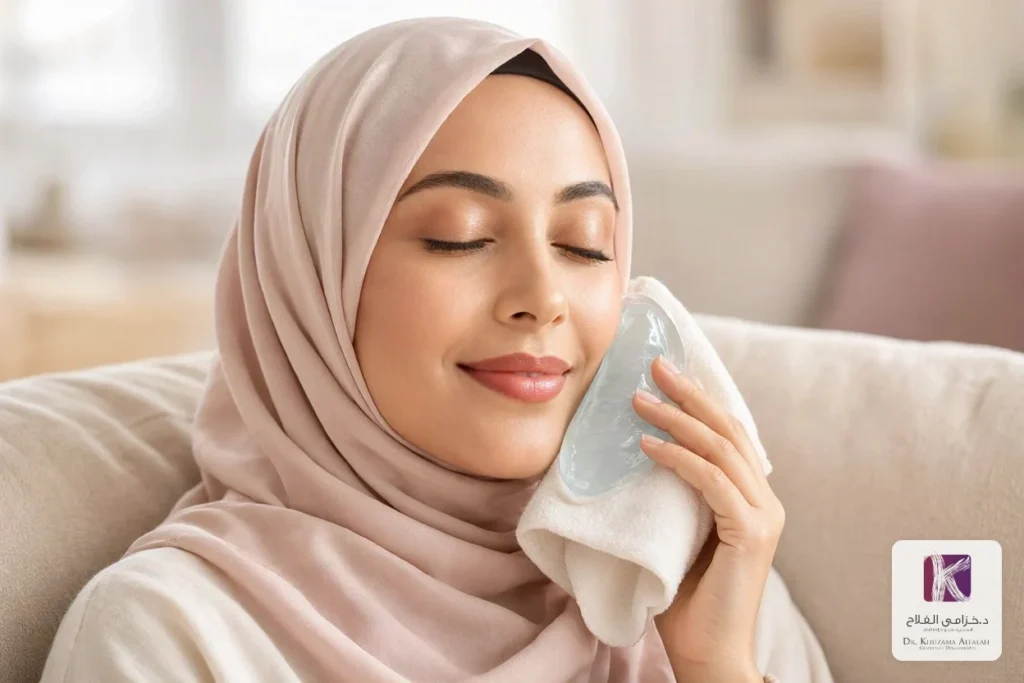
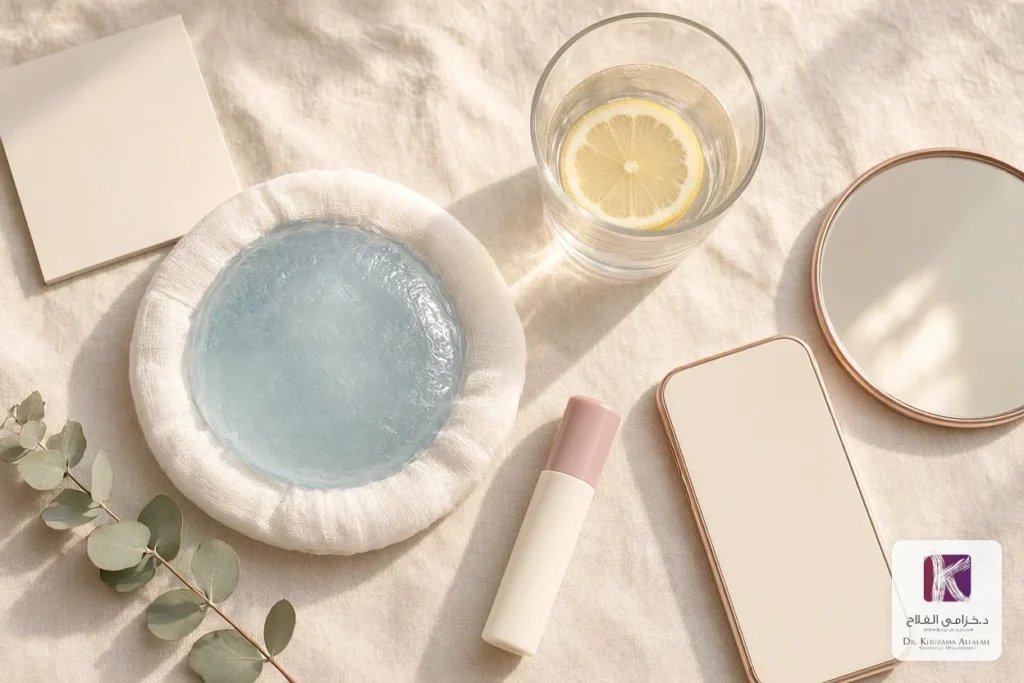
For early lip filler bruising, your clinician might recommend a cool pack wrapped in cloth and applied in short bursts. Avoid putting ice directly on your skin. Don’t eat until the numbness has worn off, or you may bite your lip without realising.
The American Society of Plastic Surgeons suggests agreeing on a recovery plan and avoiding intense activity for the first 24 to 48 hours. If you have a gym class, a run or a match coming up, settle the timing of exercise after lip filler with your injector first. Some clinics also ask patients to skip alcohol, saunas or direct sun for a short time, so ask whether that applies to you.
Days 3–7: Watch Carefully
Avoid rubbing or massaging a lump or irregular area unless your injector has told you to. Each type of filler has its own aftercare, so advice a friend received for a different product might not apply to you.
If you want to show the clinic how things are changing, take a clear photo and note the date.
Days 8–14: Use Your Review
By now, any tenderness, shape concerns or areas that feel uneven are worth raising. Many clinics suggest a follow-up around two weeks after treatment, though your own appointment may fall at a different time.
Ask your clinician about dermal filler aftercare and whether the next step is more healing time, further assessment or treatment.
Which Symptoms Need Urgent Medical Attention?
Get immediate medical care if you have unusual or severe pain, white, grey or blue skin near the injection area, vision changes, or signs of a stroke such as sudden weakness or difficulty speaking. These can point to a serious complication. Don’t wait for your two-week review, and don’t try to manage them with home aftercare. The FDA’s dermal filler safety guidance lists these among the warning signs.
Contact your treating clinic promptly if you suspect an infection, if redness or swelling is increasing, or if you develop a fever.
What Should You Tell the Clinic Before Treatment?
Share your medical history, any previous filler treatments, allergies, medicines and supplements. Mention a history of cold sores too. These details help your clinician judge whether treatment suits you and explain your individual risks.
One more thing: don’t stop a prescribed medicine because of a generic aftercare checklist. If a change seems necessary, talk to the clinician who prescribed it.
When you’re planning treatment, Dr Khuzama Al Falah’s lip filler page describes how lip proportions and aesthetic goals are assessed. Tie that conversation back to recovery by asking how the proposed approach affects your follow-up needs.
Planning Around Work, Travel or an Event in Riyadh
Wondering when to call your injector about timing? Mention a wedding, a presentation or a trip before you book, especially if visible swelling or bruising would bother you.
If you are travelling while recovering, ask how to contact the clinic from overseas. If you spend a lot of time outdoors in the heat, discuss sun and heat exposure during the first few days in Riyadh. Don’t plan around someone else’s healing journey.
Arrange Your Lip Filler Consultation or Follow-Up
If you have questions about treatment planning or your follow-up, you can contact Dr Khuzama Al Falah’s clinic in Riyadh. For a broader look at your options, read the clinic’s guide to Botox, fillers, peels and mesotherapy.
This article provides general education. Follow your treating clinician’s instructions. It does not replace medical advice or assessment.
FAQs
The questions patients ask in consultation
Swelling usually settles within 24 to 48 hours, though it can take up to a week. Early swelling also changes how your lips look, so ask the clinic when to judge the final result. If symptoms concern you, don’t wait for them to settle before getting advice.
General guidance is to avoid strenuous exercise for at least 24 hours, and the ASPS suggests 24 to 48 hours. Follow your injector’s advice on timing.
Only if your treating clinician has specifically told you to. If an area looks or feels uneven, ask about it instead of trying to reshape it yourself.
Not necessarily. Ask your clinician to assess your healing and explain what they see, rather than relying on an early photo.
Arrange a review with your injector. Explain what has persisted, whether it’s changing and whether it’s uncomfortable. Urgent warning signs need immediate care at any stage.
How long does lip filler swelling last?
Swelling usually settles within 24 to 48 hours, though it can take up to a week. Early swelling also changes how your lips look, so ask the clinic when to judge the final result. If symptoms concern you, don’t wait for them to settle before getting advice.
When can I exercise after lip filler?
General guidance is to avoid strenuous exercise for at least 24 hours, and the ASPS suggests 24 to 48 hours. Follow your injector’s advice on timing.
Should I massage my lips after filler?
Only if your treating clinician has specifically told you to. If an area looks or feels uneven, ask about it instead of trying to reshape it yourself.
Does swelling mean my lips were overfilled?
Not necessarily. Ask your clinician to assess your healing and explain what they see, rather than relying on an early photo.
What if I’m still concerned after two weeks?
Arrange a review with your injector. Explain what has persisted, whether it’s changing and whether it’s uncomfortable. Urgent warning signs need immediate care at any stage.
Send us a message on WhatsApp or book a private consultation. There is no obligation — you will leave with a plan, even if that plan is to wait.
- 60-minute clinical consultation with Dr. Khuzama personally
- Personalised treatment plan and transparent quotation
- Saudi-trained, internationally certified Consultant Dermatologist

Saudi-trained, internationally certified Consultant Dermatologist practising in Riyadh. Dr. Khuzama is recognised for a deliberately conservative philosophy she calls Natural Elegance — an approach to aesthetic dermatology that prioritises restoring features over re-shaping them.
Her practice combines evidence-based dermatology with refined aesthetic judgement. She lectures internationally on minimally invasive lifting and is among the first cohort of certified Endolift practitioners in the Kingdom.
- Consultant Dermatologist
- Saudi Commission for Health Specialties
- Advanced Aesthetic Dermatology Fellowship
- Saudi Commission for Health Specialties
- Certified Practitioner
Every clinical claim has been written, reviewed and signed off by Dr. Khuzama. We do not host sponsored content. Treatment recommendations on this site reflect what we perform in clinic — nothing more, nothing less.
A curated selection of clinician-led reading — chosen for patients researching their lifting and skin-tightening options.