
Hair thinning usually develops slowly. People begin to notice subtle changes in hair density, texture, or increased shedding well before any obvious bald areas appear. Addressing these early signs can help support existing hair follicles and maintain healthier hair growth.
Laser therapy for hair loss Riyadh is a non-surgical approach used to stimulate weakened follicles and improve scalp circulation. Under the care of Dr. Khuzama Al Falah, this treatment uses controlled light energy applied to the scalp to support natural hair growth without surgery or recovery time.
Laser-based hair regeneration is often recommended for individuals who want to strengthen existing hair, slow hair thinning, and support follicle activity before considering procedures such as hair transplantation.
What is Laser Hair Regeneration?
Laser hair regeneration refers to a medical treatment that uses low-level laser light therapy for hair loss (LLLT hair growth). The technique delivers controlled light energy to the scalp using specialized devices designed for follicular stimulation.
The light energy penetrates the scalp tissue and encourages cellular activity within the hair follicle. This process helps improve circulation, enhance oxygen delivery, and support the biological processes responsible for hair production.
Because the treatment does not damage tissue, laser hair therapy for hair loss is considered a gentle and non-invasive approach to hair restoration.
How Laser Therapy for hair loss works?
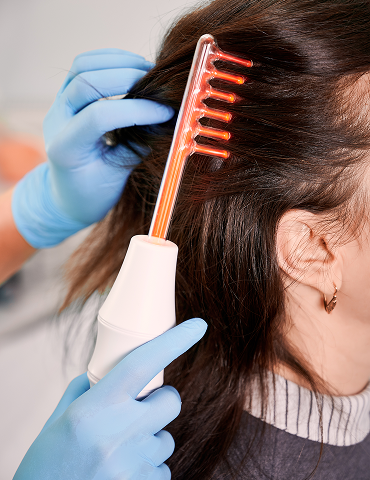
During laser treatment for hair growth, a medical device such as a hair therapy machine or laser hair head device emits low-intensity laser light onto the scalp.
This process can support hair growth through several mechanisms:
- Stimulation of follicular cells responsible for hair production
- Improved blood circulation in the scalp
- Increased delivery of nutrients and oxygen to follicles
- Activation of dormant hair follicles
- Support of the hair growth cycle
The goal of laser hair stimulation is to strengthen follicles that are still active and encourage thicker, healthier hair strands.
Who may benefit from Hair Loss Laser Therapy?
Laser-based hair therapy may be recommended for patients experiencing early or moderate hair thinning.
It may help individuals with:
- Male or female pattern hair thinning
- Diffuse hair shedding
- Stress-related hair loss
- Hormonal hair changes
- Hair weakening due to lifestyle or nutritional factors
Laser therapy can also be used alongside other treatments such as PRP, medications, or mesotherapy when a combined treatment strategy is advised.
LLLT hair growth supports active follicles by delivering low-level light to the scalp in a clinic-supervised plan.
What happens during the treatment?
A session of hair loss laser therapy is simple and comfortable.
Typical treatment steps include:
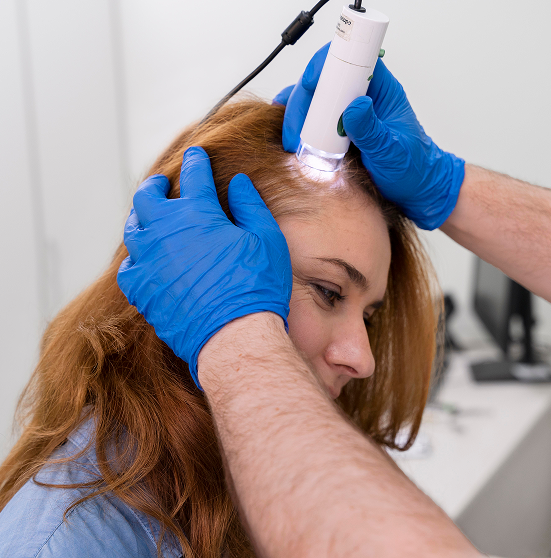
- Scalp assessment : Dr. Khuzama evaluates scalp health, hair density, and the pattern of hair thinning before recommending treatment.
- Scalp preparation : The scalp is cleansed to remove oils or residues that may affect light penetration.
- Laser application : A medical laser hair head device or hair therapy machine delivers low-intensity laser light to the scalp for about 20–30 minutes.
- Treatment schedule : Multiple sessions are usually recommended. The number of sessions depends on the degree of hair thinning.
There is no downtime, and patients can usually return to normal activities immediately.
Benefits of Laser Hair Therapy for hair loss
Patients often consider laser therapy for hair loss in Riyadh because it offers a medically supervised option without surgery.
Potential benefits may include:
- A non-surgical treatment that does not involve cuts or stitches
- Gentle stimulation of existing hair follicles
- Better blood flow within the scalp
- Support for weak or fragile hair strands
- Gradual improvement in hair thickness and overall hair quality
- Little to no recovery time for most patients
Changes usually appear slowly. The outcome depends on several factors, including the cause of hair loss, age, nutritional status, hormonal balance, and how consistently the recommended treatment plan is followed.
Laser therapy for hair loss Riyadh is a non-surgical option used to stimulate thinning areas and improve scalp circulation over time.
Scalp laser hair removal is a different procedure that targets unwanted hair, so it is not used for hair regeneration.
Why choose Dr. Khuzama Al Falah for Hair Growth Laser Therapy?
Hair loss treatments require careful diagnosis because hair thinning can result from many different causes.
Dr. Khuzama Al Falah focuses on a structured approach that includes:
- Detailed scalp and hair assessment
- Personalized treatment planning
- Medical-grade laser technologies
- Combination therapies when appropriate
- Regular monitoring of progress
The goal is to support natural hair regeneration while maintaining overall scalp health.
Expected results and treatment timeline
Laser-based hair therapy works gradually because hair follicles require time to respond to stimulation.
Typical progress may include:
- First few weeks: improved scalp circulation
- 6–8 weeks: reduction in excessive shedding in some patients
- 3–4 months: gradual improvement in hair texture and thickness
Maintenance sessions are recommended to support ongoing follicle activity.
Start early to restore your hair
If you are noticing early hair thinning or increased shedding, a professional evaluation can help identify the cause and guide treatment.
Dr. Khuzama Al Falah offers personalized consultation in Riyadh to determine whether laser hair regeneration or other therapies may be appropriate for your hair restoration goals.
Frequently Asked Questions
How much is laser treatment in Saudi Arabia?
The cost of laser hair therapy in Saudi Arabia varies depending on the clinic, technology used, and number of sessions required. Costs are estimated after a personalized assessment discussing your goals and treatment options.
Does laser therapy actually work for hair loss?
Low-level laser therapy has been studied for hair restoration and may help stimulate follicles, improve scalp circulation, and support hair growth in suitable candidates. Results depend on the primary cause and severity of hair loss.
How much is 3,000 hair grafts?
Hair transplant procedures involving around 3,000 grafts typically cost significantly more than non-surgical treatments. The exact price varies by clinic, technique, and surgeon expertise, and a consultation is needed for an accurate estimate.