
Hair thinning can feel slow. One month, your part looks wider, the next, your ponytail feels lighter, and the shedding does not seem to match your routine. If you want a non-surgical option that targets scalp health and follicle activity, exosome therapy for hair loss Riyadh is now a common topic in modern hair clinics.
Many people exploring exosomes therapy for hair loss Riyadh are looking for a non-surgical option that supports hair follicle activity and scalp health.
Under the care of Dr. Khuzama Al Falah, exosome-based protocols are used as a clinic-supervised regenerative approach to support stronger, healthier-looking hair in suitable candidates. If you are searching for a hair treatment specialist, a proper diagnosis still comes first, because the cause of hair loss shapes the plan.
What are Exosomes?
Exosomes are tiny extracellular vesicles, with a size of about 30–150 nanometres. They are naturally released by cells and can carry signaling molecules such as proteins, lipids, mRNA, and microRNA. In hair restoration, they are used for their potential to support follicle function and calm scalp inflammation.
If you are looking up exosomes for hair in KSA, you will see that most hair protocols focus on scalp delivery rather than oral or home-use formats.
Different Types of Exosome Preparations
When researching exosome therapy for hair loss Riyadh, patients often encounter different specialized brands and formulations. Two of the most common types discussed in clinical settings are:
- ASCE Exosomes (Advanced S-COSMO Exosome): These are often derived from rose stem cells or specialized cell lines using patented ExoSCRT™ technology. ASCE+ formulations are frequently used to target scalp inflammation and promote skin and hair regeneration through highly purified signaling vesicles.
- Morphya Exosomes: This type is typically part of a regenerative complex that focuses on providing a high concentration of growth factors and extracellular vesicles. Morphya protocols are often chosen for their intensive signaling properties to help revitalize dormant follicles.
The choice between these types depends on the specific concentration of signaling molecules required for your scalp condition and the clinical goals established during your consultation.
How Exosomes may support hair growth?
Exosomes may help create a scalp environment that supports growth by working along several pathways:
- Stimulating follicle activity: They may support dermal papilla cells and hair follicle stem cell signaling, which can help push follicles into the anagen (growth) phase.
- Improving circulation: They may encourage angiogenesis, which can support nutrient and oxygen delivery to follicles.
- Reducing inflammation: For some patients, scalp inflammation plays a role in shedding. Exosomes may help modulate inflammatory activity.
- Supporting tissue repair: They are often discussed in regenerative care for their role in cellular communication and repair signaling.
Patients searching hair exosomes Riyadh often ask how quickly it works. In many clinics, early changes such as reduced shedding may be noticed after 1–2 sessions, while visible density changes can take 2–6 months.
Who may be a good candidate?
Exosome hair protocols may be discussed for:
- Androgenetic alopecia (also known as male or female pattern hair loss)
- Alopecia areata (case selection matters)
- Telogen effluvium (after triggers are addressed)
- Diffuse thinning and scalp inflammation patterns
If hair loss is driven by iron deficiency, thyroid imbalance, recent illness, crash dieting, or medication-related shedding, treating the root cause usually matters more than any in-clinic procedure.
How treatment is done
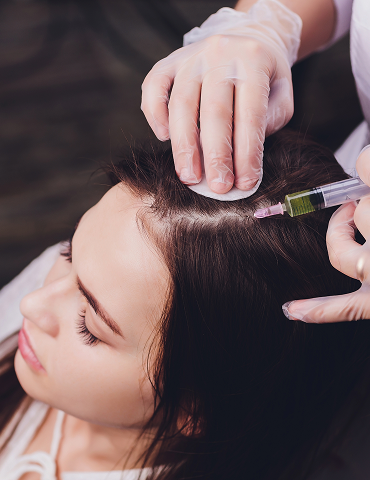
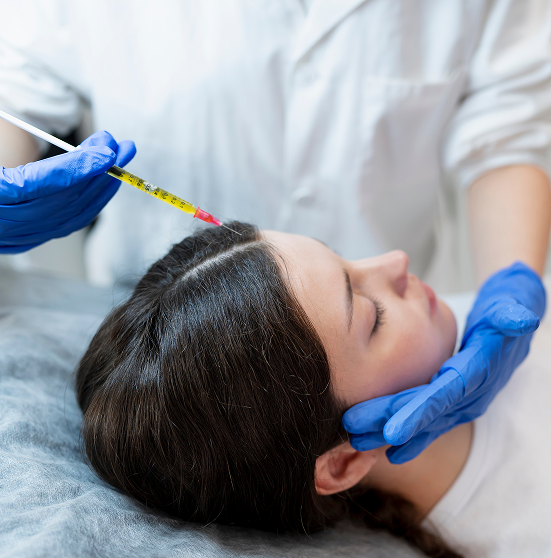
A common approach for exosome hair treatment in Riyadh is scalp delivery using microneedling or microinjections. Microneedling can improve penetration by creating controlled microchannels in the scalp. Sessions are often short, and most people return to routine activities quickly.
Your plan may be discussed as an exosome for hair therapy alone or as part of combination care.
Exosome hair therapy vs PRP
Exosome hair therapy vs PRP is a frequent comparison. PRP uses your own platelet concentrate, while exosome products are typically prepared as ready-to-use signaling vesicles. Some protocols combine them, since PRP and exosomes may support different parts of the regenerative process. The better option depends on hair loss type, scalp condition, and expectations.
Exosomes hair treatment price
Patients often search for exosomes hair treatment price details. Costs vary widely based on the product used, session count, and whether the protocol is combined with PRP, GFC, or other treatments. A consultation is the only fair way to estimate total cost because dosing and session planning are not one-size-fits-all.
Why choose Dr. Khuzama Al Falah?
- Hair treatment specialist with experience in diagnosing different causes of hair loss.
- Detailed scalp evaluation before recommending exosome therapy for hair loss Riyadh.
- Personalized treatment plans tailored to hair loss type and scalp condition.
- Modern regenerative techniques, including microneedling-assisted exosome hair treatment in Riyadh.
- Structured follow-up care to monitor progress and guide long-term hair health.
A consultation for exosomes therapy for hair loss Riyadh with Dr.Khuzama helps determine whether this regenerative approach suits the specific pattern and cause of hair thinning.
Best exosomes for hair growth
Many patients ask which brand offers the best exosomes for hair growth. In reality, the outcome depends less on a label and more on how the therapy is selected and administered. Reliable sourcing, proper storage, and careful clinical handling all influence the quality of treatment. A qualified hair treatment specialist also evaluates the scalp condition and hair loss pattern before deciding whether exosome therapy is suitable.
If you are considering exosomes therapy for hair loss Riyadh, a consultation with Dr. Khuzama Al Falah can help determine whether this regenerative treatment fits your hair loss pattern and long-term hair restoration goals.
Frequently Asked Questions
Which is better PRP or exosomes for hair loss?
PRP and exosomes serve different purposes in hair restoration. PRP uses growth factors from one’s own blood and is commonly used for early hair thinning or maintenance. Exosome therapy focuses on cellular signaling and scalp regeneration. The most appropriate option depends on the cause of hair loss, scalp health, and the treatment plan recommended after evaluation.
How much does exosomes therapy cost for hair loss?
The cost varies from clinic to clinic. It depends on the number of sessions needed, the type of exosome preparation used, and whether the therapy is combined with techniques such as microneedling or scalp injections. A consultation is usually required to determine the total treatment plan and expected cost.
What is the dark side of exosomes?
One challenge with exosome therapy is the lack of uniform standards across products. Not all exosome preparations are the same, and clinical evidence is still evolving. For this reason, treatment should only be performed in a medical setting where product sourcing and handling follow strict protocols.
What are the disadvantages of hair exosomes?
Results can vary from person to person, and several sessions may be needed before visible improvement appears. The treatment can also be more expensive than conventional options. Some patients can also experience temporary redness or mild scalp tenderness after the procedure.