

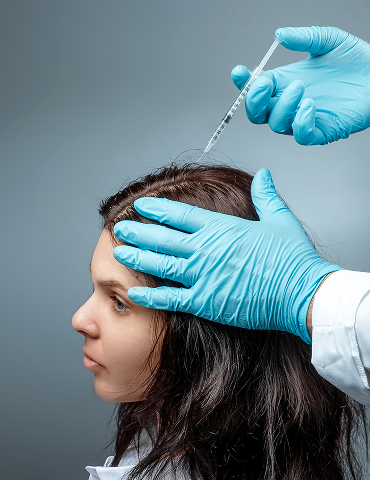
Hair loss can look simple on the surface, but the causes are often mixed. Genetics, hormones, scalp inflammation, recent illness, iron or vitamin deficiencies, thyroid imbalance, stress, and certain medications can all play a role.
Hair regrowth with Finasteride, Dutasteride, and Minoxidil is often discussed as a “core” medical approach for pattern hair loss. These options are not interchangeable, and they are not right for everyone. The safest results come from matching the treatment to your diagnosis, along with your risk factors.
Dr. Khuzama Al Falah starts with a careful diagnosis before recommending any plan for hair loss treatment.
Hair loss evaluation
A good plan begins with answers, not guessing. Your consultation may include:
- Careful examination of the scalp and hair to understand the pattern of thinning, overall scalp condition, and whether there is breakage or any scarring.
- Discussion of your medical and family history, including recent stress, dieting, medications, or postpartum changes that may influence hair growth.
- If excessive shedding is a concern, a simple hair pull test may be done to see how many hairs come away easily and to gauge the level of shedding.
- Blood tests to check for possible underlying causes such as iron deficiency, thyroid imbalance, or vitamin deficiencies.
- In some situations, a small scalp sample or microscopic evaluation of hair roots may be advised if the diagnosis is not clear or if scalp inflammation is suspected.
Minoxidil for hair regrowth
Minoxidil is applied to the scalp and is commonly used to slow shedding and support thicker growth over time. Consistency matters more than “stronger” formulas. Many patients need several months before they can judge whether it is helping.
Dutasteride and minoxidil for hair loss is a common combination approach in suitable candidates under medical supervision.
Common minoxidil side effects include scalp irritation, dryness, itching, or flaking in some users.
Finasteride for pattern hair loss
Finasteride is a prescription medicine that lowers scalp and serum DHT activity by blocking 5-alpha-reductase. It is commonly used for male androgenetic alopecia and is most effective when started early and continued consistently. If you stop, the benefits typically fade over time.
Finasteride causes sexual side effects in some patients. Mood changes have also been reported. Women who are pregnant or may become pregnant must not use finasteride.
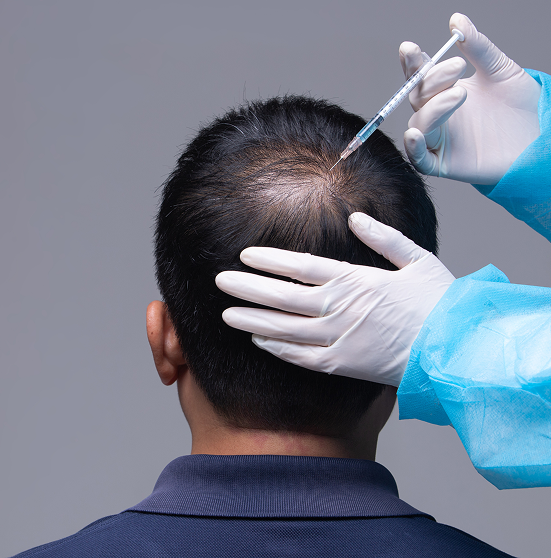
Dutasteride and Dutasteride Injections
Dutasteride lowers the level of dihydrotestosterone (DHT), a hormone that plays a role in many cases of pattern hair loss. It acts by blocking the enzyme that converts testosterone into DHT. Because it acts on two forms of this enzyme, its effect on reducing DHT can be stronger than finasteride.
In some cases, dutasteride may be prescribed as an oral medication. Certain clinics also offer dutasteride injections, where very small amounts of the medicine are placed directly into the scalp. The aim is to deliver the treatment closer to the hair follicles.
Dutasteride and minoxidil results may include reduced hair shedding and gradual improvement in hair thickness when the treatment plan is followed consistently.
Dr. Khuzama may suggest dutasteride injections when the hair loss pattern indicates androgen-related thinning and when an in-clinic treatment could work alongside topical therapies. This approach usually involves a planned series of sessions with follow-up visits to monitor progress.
The response to dutasteride and minoxidil differs from person to person. Results often depend on how advanced the hair loss is, the amount of active hair follicles remaining, and how regularly the treatment plan is followed.
Managing expectations and safety
Medical treatment for hair loss takes time. In most cases, patients need several months of consistent therapy before the response can be properly assessed. Progress is often reviewed using clinical examination and comparison photographs.
Both dutasteride and finasteride may cause side effects in some men, including changes in libido, erectile function, or ejaculation. Anyone planning a pregnancy should discuss this with their doctor before starting treatment. These medications are not suitable for use during pregnancy.
Why trust Dr. Khuzama Al Falah for hair loss treatment
- Diagnosis-first approach: Treatment is based on the hair loss pattern and clinical findings, not trends.
- Lab-guided planning: Medical triggers like thyroid imbalance or iron deficiency are addressed when present.
- Structured protocols: Clear timelines, follow-ups, and response tracking, so you know what is working.
- Balanced counseling: Benefits, risks, and realistic outcomes are explained in plain language.
- Combination planning when needed: Topical care, prescription options, and in-clinic treatments are coordinated rather than piled on randomly.
If you are noticing thinning, widening part lines, or steady shedding, book a consultation with Dr. Khuzama Al Falah for a diagnosis-based plan. A targeted approach, started on time, is usually the difference between stabilizing hair loss and constantly chasing it.
Frequently Asked Questions
Can I take finasteride, minoxidil, and dutasteride together?
This is not a routine combination for everyone. In many cases, clinicians avoid combining finasteride and dutasteride because they act on the same pathway. Dr. Khuzama will decide based on diagnosis, risk profile, and goals.
What are the big 3 for hair regrowth?
The phrase usually refers to minoxidil, a DHT blocker (most commonly finasteride), and anti-inflammatory scalp support (often ketoconazole shampoo or a clinician-directed scalp plan). Your “big 3” may differ depending on the cause.
What blood test is done for hair loss?
Common starting labs often include iron status (such as ferritin), thyroid testing, and select vitamin or hormone tests when indicated. The exact panel depends on symptoms, sex, age, and medical history.
Is 25 too late for finasteride?
No. Many men start in their 20s. Starting earlier can help preserve follicles that are still active, but suitability depends on your diagnosis and medical history.