

- Micro-coring for skin volume reduction
- Internal laser fat melting & tightening
- Internal radiofrequency skin contouring- ATTIVA
- Deep Laser Resurfacing for Severe Scars
- Radiofrequency Needle Tightening
- Gentle Laser Facial/Pore Cleansing
- Advanced Pigment & Tattoo Removal
- Ultherapy (Ulthera)
- Customized Skin Peeling Programs
- Vascular Lesion Solutions
- Fraxel fractional laser
Years of sun exposure accumulate quietly in the skin, resulting in uneven tone, fine lines, and texture roughness. These skin concerns resist surface-level creams or topical treatments.
They are structural changes within the skin’s dermal architecture, and they require a treatment that works at that level.
Fraxel Skin Resurfacing is one of the most effective technologies for improving skin texture and tone through non-ablative resurfacing. Using advanced Erbium glass laser technology with dual 1550nm/1927nm wavelengths, the treatment targets damaged skin cells while stimulating collagen regeneration.
What is Fraxel skin resurfacing?
Fraxel skin resurfacing is an advanced laser treatment designed to improve skin texture, pigmentation, and early signs of aging.
The system uses a specialized Erbium glass laser that delivers microscopic laser beams into the skin, creating tiny treatment zones. These micro-injuries stimulate the skin’s natural healing process and trigger new collagen production.
Fraxel technology works with two targeted wavelengths:
- 1550nm wavelength – penetrates deeper layers to improve texture, scars, and wrinkles
- 1927nm wavelength – focuses on surface pigmentation and sun damage repair
Together, these 1550nm/1927nm wavelengths enable effective non-ablative resurfacing, meaning the outer layer of skin remains largely intact while deeper layers regenerate.
What does Fraxel skin resurfacing treat?
- Sun damage repair – solar lentigines, photoaging, UV dyschromia
- Acne scars – atrophic, rolling, and superficial boxcar scars
- Fine lines and wrinkles – periorbital, perioral, and global facial
- Melasma and post-inflammatory hyperpigmentation
- Uneven skin tone and texture roughness
- Surgical and traumatic scars
- Actinic keratoses (pre-cancerous sun damage lesions)
- Stretch marks (striae)
- Age spots and diffuse skin quality decline
Areas commonly treated with Fraxel Laser
Because of its versatility, Fraxel skin resurfacing can address several skin concerns across the face and body.
Common treatment areas include:
- Face for sun damage repair and uneven skin tone
- Cheeks with acne scars and rough texture
- Neck and décolletage with pigmentation concerns
- Hands affected by sun exposure
- Back or shoulders with acne marks
Patients often notice visible fractional laser before and after improvements as the skin becomes smoother and brighter.
Why choose Fraxel over other Laser treatments?
A typical Fraxel Skin Resurfacing session is performed using the advanced Erbium glass laser system. Dr. Khuzama Al Falah uses Fraxel technology to deliver noticeable improvements in skin quality, including sun damage repair, smoother texture, and clearer tone. Many patients see remarkable fractional laser before and after improvements as the skin gradually renews itself.
- Consultation and skin mapping
Dr. Khuzama assesses your skin phototype, concern type, and tolerance for downtime. Wavelength selection (1550nm, 1927nm, or dual), energy settings, and number of sessions are determined individually.
- Pre-treatment priming
For patients with pigmentation concerns or darker skin phototypes, a 2-4 week pre-treatment protocol, including sunscreen discipline, topical retinoids, or hydroquinone, optimizes outcomes and reduces PIH risk.
- Topical Anesthesia
A topical numbing cream is applied for 45-60 minutes before the session. Fraxel fractional laser produces a warm, prickling sensation, generally well-tolerated with topical anesthesia, with no injections required
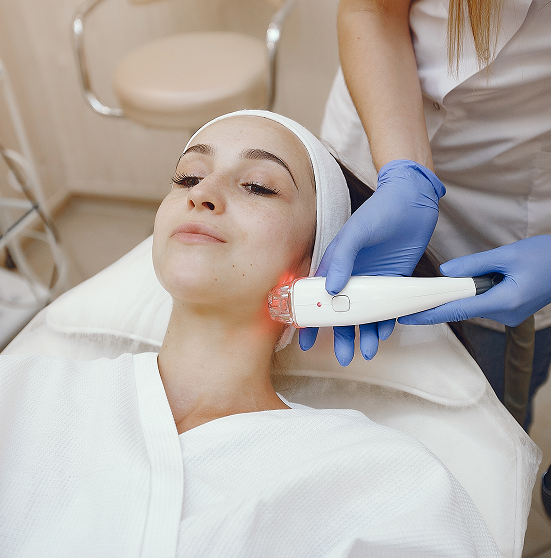
- Laser Treatment
The Fraxel handpiece is passed systematically across the treatment area, delivering the selected wavelength in controlled, fractional passes. A full-face session takes 20-45 minutes, depending on settings and area coverage.
- Recovery and results
Days 1-3: redness, mild swelling. Days 3-7: bronzing and micro-shedding as treated tissue exfoliates. Strict SPF and gentle skincare are prescribed. Collagen remodeling continues for 3-6 months post-series, so Fraxel results continue to improve long after the final session.
How the Fraxel procedure works?
Feature | Fraxel Dual (1550/1927nm) | Fractional CO2 Laser | Microneedling RF | Chemical Peels (Medium) |
Technology | Non-ablative erbium glass fractional laser | Ablative fractional CO2 laser | Mechanical + thermal collagen induction | Chemical epidermal renewal |
Non-ablative resurfacing | Yes – primary classification | No – ablative (vaporizes tissue) | Yes | Superficial ablation only |
Sun damage repair | Excellent – 1927nm specifically designed for this | Moderate – risk of PIH in darker tones | Limited | Good |
Acne scar treatment | Excellent – 1550nm gold standard | Excellent – deeper correction | Good | Superficial scars only |
Erbium glass laser | Yes – 1550nm erbium glass | No – CO2 medium (10,600nm) | No | No |
Dual wavelength | Yes – 1550nm + 1927nm | Single wavelength (10,600nm) | No laser wavelength | Not applicable |
Collagen remodeling duration | 3-6 months post-series | 3-6 months | 3-6 months | 4-8 weeks per session |
Fractional laser before & after Impact | Dramatic – multi-dimensional improvement | Maximum – ablative depth | Good | Moderate |
Are you an ideal candidate?
You may benefit from Fraxel skin resurfacing if you:
- Have uneven skin tone or sun spots
- Need professional sun damage repair
- Have acne scars or rough skin texture
- Want skin rejuvenation through non-ablative resurfacing
- Seek visible fractional laser before and after improvements
A consultation helps determine the most appropriate settings using 1550nm/1927nm wavelengths based on your skin type and concerns.
Why patients choose Dr. Khuzama Al Falah for Fraxel treatments?
Fraxel skin resurfacing is not a treatment in which the device performs the work autonomously. Energy settings, treatment density, the number of passes, the selection of 1550nm versus 1927nm versus dual delivery, these decisions require genuine clinical expertise in laser physics, tissue biology, and the specific skin characteristics of the patient
Dr. Khuzama Al Falah’s fellowship in Laser and Cosmetic Dermatology provides comprehensive, hands-on training in non-ablative and fractional laser technologies, including erbium glass wavelength lasers, their interactions with different tissue depths, and protocol design for diverse skin phototypes.
Patients appreciate her precise approach, which consistently delivers natural-looking fractional laser results before and after.
Your skin has a better version – waiting beneath the surface
If your skin shows signs of sun damage, uneven tone, or scarring, Fraxel Skin Resurfacing offers an advanced solution that stimulates natural skin renewal.
Schedule your consultation with Dr. Khuzama Al Falah today and discover how Fraxel technology can restore smoother, clearer, and more radiant skin.
Frequently Asked Questions
Is Fraxel good for sun damage?
Yes, Fraxel is highly effective for sun damage repair, particularly with the 1927nm wavelength targeting pigmentation.
How many Fraxel sessions are needed?
Most patients require 3-5 sessions for optimal results, depending on skin concerns and treatment goals.
How long do Fraxel results last?
Results from Fraxel Skin Resurfacing can last several years with proper skincare and sun protection.
What is the downtime after Fraxel treatment?
Because it uses non-ablative resurfacing, downtime is usually minimal, with mild redness or swelling lasting a few days.