
Advanced Scar Management in Riyadh
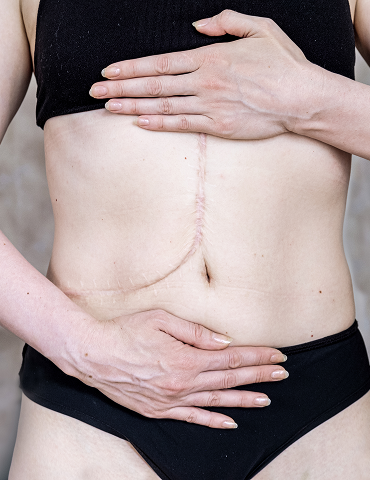
Advanced scar management guided by Dr. Khuzama Al Falah’s triple fellowship expertise in laser, surgical, and medical dermatology
Scars form as part of the body’s healing process, but for many people, they can cause lasting cosmetic, emotional, or functional issues. Today, scar management aims to improve not only the appearance of a scar, but also its texture and how it integrates with the surrounding skin, restoring your confidence and self-image.
Whether scars result from surgery, acne, injury, or burns, today’s evidence-based scar management techniques can improve their texture, color, flexibility, and overall skin quality.
Scars change the most during their first year of healing. Starting scar management early and staying consistent can help guide healing for smoother, softer, and less noticeable scars.
Scar management after surgery: early care makes a measurable difference
Scar management after surgery should begin once the wound has healed and the stitches are removed. This is an important phase because collagen is changing under the skin.
Without proper management, scars can become thick, dark, tight, or raised.
Why do you need scar management after surgery?
- Reduced risk of hypertrophic and keloid scarring
- Improved skin flexibility and comfort
- More refined long-term cosmetic outcomes
Dr. Khuzama Al Falah, a specialist trained in both laser and surgical dermatology, can make scar management after surgery much more precise and heal better from the start.
Treatment & procedures for scar management
Scar management is never one-size-fits-all. A personalized treatment plan is created using the latest, advanced laser and surgical technologies based on scar type, depth, age, skin tone, and location..
Scar removal treatment: targeted solutions for visible scars
Modern scar removal treatments are personalized. Since every scar is different, treatment plans depend on the scar’s depth, age, size, and location.
Common Scar Removal Treatment options include:
- Fractional laser resurfacing to stimulate collagen remodeling
- Microneedling to improve surface texture
- Injectable therapies for depressed or tethered scars
- Medical-grade chemical peels to correct pigmentation
Even long-standing scars can show continued improvement with the right expert-led scar removal treatment; however, scars that are older than two years typically improve at a slower pace.
Keloid scar treatment & Hypertrophic scar treatment
Raised scars need special medical care. Keloid scar treatments are for scars that grow beyond the original wound and continue to thicken. Hypertrophic scar treatments help with raised scars that stay within the area of the injury.
Both Keloid Scar Treatment and Hypertrophic Scar Treatment may include:
- Corticosteroid injections to flatten excessive scar tissue
- Laser therapy to reduce redness, thickness, and stiffness
- Medical-grade silicone therapy for pressure modulation and hydration
With regular hypertrophic scar treatment and follow-up, raised scars can become much softer, flatter, and more comfortable.
Burn scar treatment: restoring movement, comfort, and skin quality
Burn Scar Treatment addresses both the appearance and function of scars. A comprehensive treatment for scar after burn program may include:
- Fractional laser therapy for thickened tissue
- Microneedling to improve surface irregularities
- Injectable treatments to release tight scar bands
- Medical skincare to address discoloration and sensitivity
With advanced burn scar treatment, people often notice real improvements in how their skin moves, feels, and looks.
Scar Treatment for face: precision where it matters most
Treating facial scars requires extra care and precision. Scar treatment for the face aims to fade scars while maintaining your natural features’ balance and expressiveness. Even small scars can seem very noticeable on the face.
Advanced scar treatment for face options may include:
- Laser resurfacing for acne and surgical scars
- Subcision for depressed and tethered scars
- Skin boosters for enhanced surface smoothness
What to expect during your scar management consultation?
Your scar management consultation at the Well Clinic in Riyadh with Dr. Khuzama Al Falah is detailed, methodical, and fully personalized, with a focus on medical accuracy and realistic outcomes..
During your visit, you can expect:
- In-depth scar evaluation
- Assessment of skin type and pigmentation risk
- Review of scar depth, age, and anatomical location
- Discussion of the most suitable treatment combinations
- Clear explanation of the treatment timeline and expected results
- Guidance on aftercare, sun protection, and skincare
Scar management techniques under the care of a triple fellowship-trained dermatologist
Scar treatment is most precise when led by a doctor trained in laser, surgical, and medical dermatology. Dr. Khuzama Al Falah has completed advanced training in all three areas, offering a unique level of expertise in scar management here in Riyadh.
Her surgical experience helps with complex scars, her laser skills allow for advanced non-invasive treatments, and her medical dermatology background ensures any underlying issues are treated. This well-rounded, doctor-led approach means scar treatments are safe, accurate, and look natural.
Advanced Scar Management Technologies Used
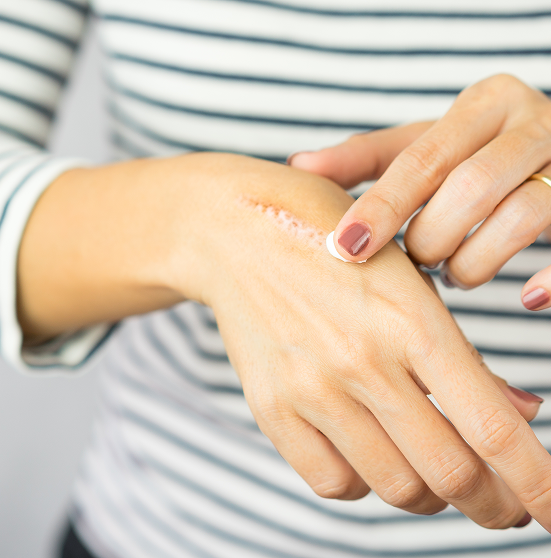
To ensure safe, precise, and natural-looking results, Dr. Khuzama Al-Falah uses a combination of advanced laser and clinical devices tailored for effective scar remodeling and improvement:
Fractional Laser Resurfacing
A leading-edge laser treatment used to stimulate deep collagen remodeling. It precisely targets scar tissue to improve texture, reduce stiffness, and blend the scar’s color with the surrounding skin, making it a core option for most scar types.
Microneedling
A minimally invasive procedure that uses fine needles to create controlled micro-injuries. This process triggers the skin’s natural healing response, generating new collagen and elastin to improve surface texture and smooth out minor irregularities in the scar.
Corticosteroid & Injectable Therapies
Targeted injections used for raised scars, specifically keloids and hypertrophic scars. Corticosteroids flatten excessive scar tissue; they also reduce itching and inflammation, while other injectable therapies can release tight scar bands, restoring movement and comfort.
Medical-Grade Silicone Therapy
A non-invasive technique used to apply pressure modulation and hydration. It is an essential component of care for raised scars (keloid and hypertrophic), helping them become softer, flatter, and less noticeable over time.
These technologies allow Dr. Khuzama to tailor each treatment to your specific scar type, depth, age, and skin tone—ensuring safe care with optimal aesthetic and functional outcomes.
Advanced scar management led by Dr. Khuzama Al Falah
Effective scar management combines medical knowledge, advanced laser technology, and surgical skill.
Whether you need facial scar care, burn scar treatment, or help with keloid scars, having Dr. Khuzama lead your care at her Riyadh practice means safer and more natural results.
Awaiting smoother & healthier-looking skin with expert guidance? Book your Scar Management consultation at Well Clinic in Riyadh today!
Frequently Asked Questions (FAQs)
What is the purpose of scar management?
The purpose of Scar Management is to improve the appearance, texture, flexibility, and comfort of scarred skin.
Who is a good candidate for scar revision?
Anyone with raised, painful, restrictive, or cosmetically concerning scars may be a suitable candidate.
What type of doctor treats scar tissue?
Dermatologists and plastic surgeons are the primary specialists who treat scar tissue.
When to start scar management?
Scar management after surgery or injury typically begins once the wound has healed and the skin is intact.
What are the 4 stages of scar healing?
Hemostasis, inflammation, proliferation, and remodeling.
When is scar revision medically necessary?
When a scar limits movement, causes pain, or results in repeated skin breakdown.
What type of surgery removes scar tissue?
Scar excision and revision surgeries are commonly performed to reshape or remove scar tissue.
Which doctor removes scars?
Dermatologists and plastic surgeons both perform scar removal procedures.
Can dermatologists reduce scars?
Yes, Dr. Khuzama Al Falah utilizes lasers, injectables, microneedling, and medical therapies to effectively reduce scars.