anti-wrinkle injections
What Is Full-Face Botox?
Areas Treated and How a Personalised Plan Works
Full-face Botox describes a personalised treatment plan to relax selected facial muscles with botulinum toxin. It doesn’t mean injecting every part of your face, and it doesn’t mean the same dose for everyone. The plan starts with what bothers you, how your face moves, and which expressions you want to keep.
If you’re researching Botox in Riyadh, it helps to know which areas might be discussed, and why an area may be included or left alone. Dr Khuzama Al Falah explains her consultation-led approach on her Botox treatment page.
In this article, you’ll learn what “full-face Botox” really means, which areas may be discussed, why personalisation matters, how Botox compares with fillers and skin tightening, and what to expect from results, duration, risks and aftercare.
What Does “Full-Face Botox” Actually Mean?
It’s a broad label for treatment planning, not a list of injection sites. Two people who ask for “full face” can need very different plans. So at your consultation, ask exactly which areas are included.
Botox injections temporarily relax targeted muscles. That can help soften wrinkles caused by facial movement. BOTOX is one brand of botulinum toxin. There are other products, but their dosing units cannot be interchanged.
Describe the concern before you name a treatment. For example, “My forehead lines show when I raise my eyebrows” tells your clinician far more than “I want everything treated.”
Which Botox Areas May Be Discussed?
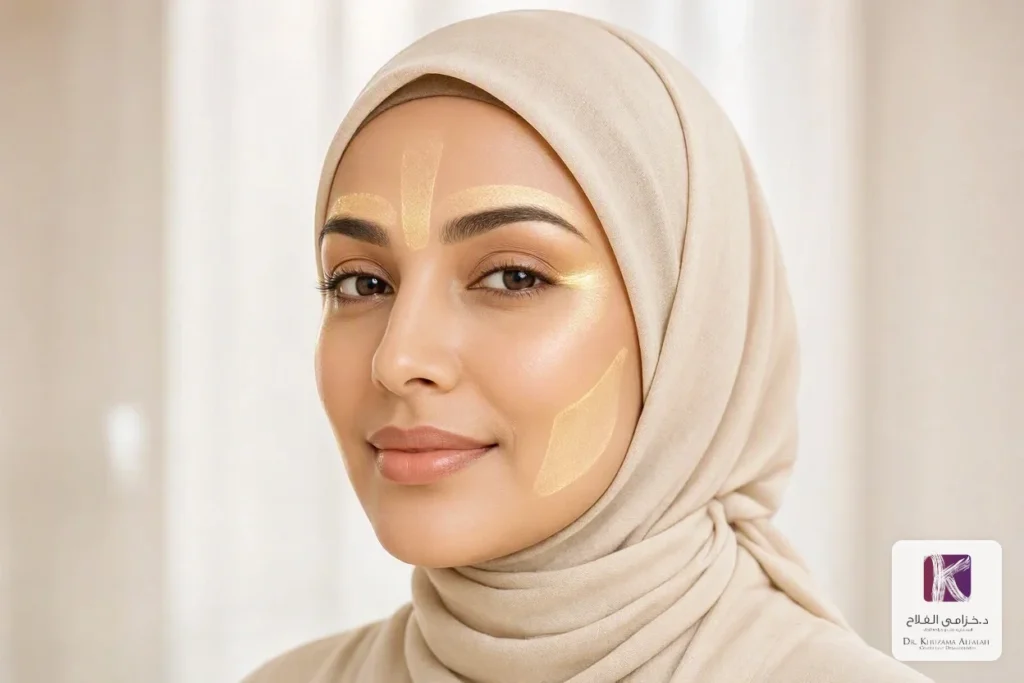
The forehead, frown lines and crow’s feet are the familiar upper-face areas. Other requests need their own assessment. A broad treatment name doesn’t mean every area suits you.
| Area | Concern to discuss | Question to ask |
|---|---|---|
| Forehead | Horizontal expression lines | How will the plan account for my brow position? |
| Between the eyebrows | Vertical frown lines | Is muscle movement behind the lines I notice? |
| Outer eye area | Crow’s feet | What change is realistic when I smile? |
| Brow area | Brow position or asymmetry | Is a Botox brow lift suitable for my anatomy? |
| Masseter muscles | Jaw-muscle size | Does this need a separate jaw assessment? |
The manufacturer’s US prescribing information lists forehead lines, frown lines and crow’s feet as approved uses of BOTOX Cosmetic. That doesn’t confirm Saudi approval for every product or indication. Ask your clinician which product is proposed, what it’s used for, and what local approval applies.
Forehead, Frown Lines and Crow’s Feet
Forehead Botox, frown lines and crow’s feet often come up together, but they’re separate areas. Ask what each proposed treatment is meant to improve, and what it can’t.
Brow and Jaw Treatments
A Botox brow lift needs individual assessment. It isn’t an automatic add-on to a full-face plan.
Jaw goals deserve their own conversation. Read the clinic’s masseter Botox and jaw slimming page to see how that treatment is approached. Suitability and the reason for treatment should be explained before you consent.
Why Does a Personalised Approach Matter?
A good consultation looks at your medical history, past procedures and what you want to change. Tell your clinician about any medicines, supplements, pregnancy plans and earlier cosmetic treatments before botulinum toxin therapy.
Bring a short list:
- Which expression lines bother you most?
- What do you like about your face as it is?
- Have you had toxin injections before, and which product?
- What would count as a worthwhile change for you?
- Is an event pushing your timing?
You should leave knowing the proposed areas, the limits, the risks and the follow-up plan. Ask why each area is included. “Full face” should make the plan clearer, not replace the explanation.
Does Full-Face Botox Replace Fillers or Skin Tightening?
No. Relaxing a muscle is different from adding volume or tightening loose skin. A whole-face assessment may find more than one concern, and Botox won’t be the answer to all of them.
If your main worry is jowls or sagging, read the clinic’s article on Botox versus face tightening. Volume loss is a different question, so see the clinic’s face fillers page. Lifting without surgery is covered under non-surgical facelift. For a wider comparison, the guide to Botox, fillers, peels and mesotherapy is a good next read, and you can also explore other non-surgical wrinkle treatments.
These pages will help you prepare your questions. A consultation is still needed to decide what is likely to work for you, or whether treatment should wait.
If you choose lip filler, our guide to lip filler recovery and aftercare explains the first two weeks.
How Soon Will You See Results, and How Long Do They Last?
Results build gradually. According to the American Academy of Dermatology, many people notice changes within 3–7 days. The effect on wrinkles generally lasts 3–4 months, depending on the person. Ask your clinician when they’d like to review your result, and try not to judge it too early.
For a closer look at timelines and maintenance, read how long Botox lasts.
What Are the Risks and Aftercare Considerations?
Bruising, soreness, swelling and headache are possible. Less common problems include a drooping brow or eyelid and an uneven smile. Get urgent medical help for trouble breathing or swallowing, or for any other serious symptom after treatment. Botox is a prescription treatment and should be given by a qualified medical provider.
Follow your clinician’s written aftercare advice on caring for the treated areas and returning to exercise. If something doesn’t feel right, let the clinic know.
Ready to Talk Through Your Goals?
Start with the concerns you want assessed and the questions you need answered. You can book a consultation with Dr Khuzama Al Falah in Riyadh to discuss a plan built around your face.
This article is educational and does not replace an individual medical assessment. Suitability, risks and results vary from person to person.
FAQs
The questions patients ask in consultation
Not necessarily. “Three-area” usually refers to the forehead, frown lines and crow’s feet, and some clinics use “full face” to mean the same thing. Ask which specific areas are included in your plan.
There’s no reliable universal number for a full-face plan. Ask for a product-specific explanation based on the areas assessed.
Preserving expression is a goal you can set. Treatment targets chosen muscles and leaves others working. The outcome still depends on your plan and how you respond.
Yes. You can bring a single concern to your consultation. Ask whether a focused plan is appropriate and whether neighbouring areas affect it.
Tell your clinician if you are pregnant, planning a pregnancy or breastfeeding, take regular medicines, or have a nerve or muscle condition. They will advise whether treatment is suitable or should be deferred.
Is full-face Botox the same as 3-area Botox?
Not necessarily. “Three-area” usually refers to the forehead, frown lines and crow’s feet, and some clinics use “full face” to mean the same thing. Ask which specific areas are included in your plan.
How many units will I need?
There’s no reliable universal number for a full-face plan. Ask for a product-specific explanation based on the areas assessed.
Will I still be able to make facial expressions?
Preserving expression is a goal you can set. Treatment targets chosen muscles and leaves others working. The outcome still depends on your plan and how you respond.
Can I treat just one area?
Yes. You can bring a single concern to your consultation. Ask whether a focused plan is appropriate and whether neighbouring areas affect it.
Who should wait or avoid Botox?
Tell your clinician if you are pregnant, planning a pregnancy or breastfeeding, take regular medicines, or have a nerve or muscle condition. They will advise whether treatment is suitable or should be deferred.
Send us a message on WhatsApp or book a private consultation. There is no obligation — you will leave with a plan, even if that plan is to wait.
- 60-minute clinical consultation with Dr. Khuzama personally
- Personalised treatment plan and transparent quotation
- Saudi-trained, internationally certified Consultant Dermatologist
Saudi-trained, internationally certified Consultant Dermatologist practising in Riyadh. Dr. Khuzama is recognised for a deliberately conservative philosophy she calls Natural Elegance — an approach to aesthetic dermatology that prioritises restoring features over re-shaping them.
Her practice combines evidence-based dermatology with refined aesthetic judgement. She lectures internationally on minimally invasive lifting and is among the first cohort of certified Endolift practitioners in the Kingdom.
- Consultant Dermatologist
- Saudi Commission for Health Specialties
- Advanced Aesthetic Dermatology Fellowship
- Saudi Commission for Health Specialties
- Certified Practitioner
Every clinical claim has been written, reviewed and signed off by Dr. Khuzama. We do not host sponsored content. Treatment recommendations on this site reflect what we perform in clinic — nothing more, nothing less.
A curated selection of clinician-led reading — chosen for patients researching their lifting and skin-tightening options.