Healing from Within: Why We Are Recommending Rejuran for Post-Laser Sensitivity
Laser treatments are one of the most effective tools in modern dermatology. Whether it is a fractional laser for pigmentation, a resurfacing session for acne scars, or a laser hair removal course, the results can be transformative. But there is a side of laser treatment that patients in Riyadh rarely hear about until they experience it themselves: post-laser sensitivity.
If your skin has felt tight, flushed, easily irritated, or unusually reactive to your regular skincare in the weeks after a laser session, you are not imagining it, and you are not alone.
At Dr. Khuzama Al Falah’s clinic, this is one of the most common concerns we see, especially given Riyadh’s dry heat, strong sun exposure, and the popularity of frequent laser sessions for hair removal and skin resurfacing.
This is exactly why, for many patients, we are now recommending Rejuran as part of post-laser recovery, not as a luxury add-on, but as a targeted way to help the skin repair itself from within.
In this article
What Actually Happens to Skin After a Laser Treatment?
Lasers function by causing controlled, tiny thermal harm in the skin. This activates the body’s natural wound-healing response, which eventually results in smoother texture, less pigmentation, or tighter pores. However, the same controlled injury temporarily affects the skin barrier, which is the outermost layer that keeps moisture and irritants out.
While the barrier rebuilds, skin can become:
- More reactive to heat, sun, and skincare products
- Prone to redness, dryness, or a stinging sensation
- Slower to retain hydration (increased transepidermal water loss)
- Temporarily more fragile, particularly with repeated or frequent sessions
This usually goes away in a few days for most individuals. However, sensitivity can last longer than anticipated in Riyadh, where low humidity and sun exposure put additional strain on recovering skin, particularly in patients who receive regular laser treatments.
Why We Recommend Rejuran Specifically?
Rejuran is a regenerative skin booster built around polynucleotides (PN), sometimes referred to as PDRN. These are purified DNA fragments, most commonly derived from salmon, chosen because their molecular structure is highly compatible with human skin.
When introduced into the skin, polynucleotides work with the tissue’s own repair signalling rather than against it.
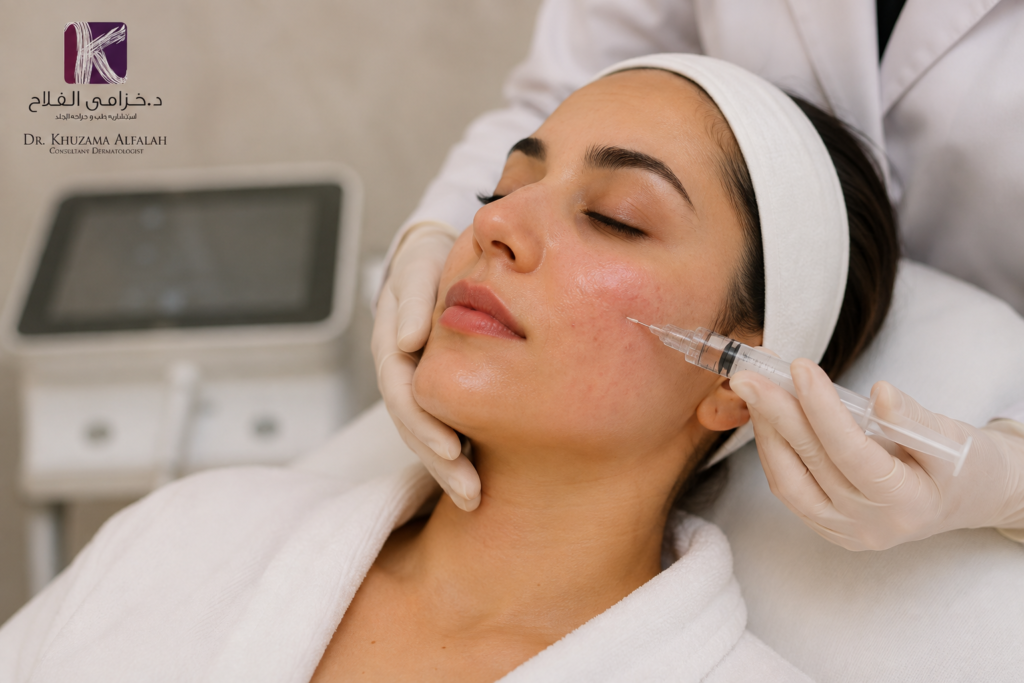
The clinically documented mechanism involves:
- Fibroblast activation – supporting the cells responsible for producing collagen and elastin
- Anti-inflammatory signalling – helping to calm the inflammatory response that drives redness and irritation
- Improved hydration retention – supporting the barrier’s ability to hold on to moisture
- Supports tissue regeneration – Provides structural support within the dermis at a deeper level than topical medications.
In layman’s terms, a laser acts as a trigger for renewal, while Rejuran aids in the follow-through, allowing the skin to mend itself more painlessly and uniformly in many individuals.
This is why dermatologists throughout the world commonly employ Rejuran in conjunction with laser resurfacing, microneedling, and other energy-based treatments, especially for patients who experience extended redness or a damaged barrier following.
Healing From Within, Not Just on the Surface
Many post-laser skincare products focus on the skin’s surface, such as soothing lotions, sunscreen, and gentle cleansers. These are crucial, and we continue to suggest them. They do, however, provide significant external support for the skin.
Rejuran’s role is distinct. Because it is injected into the dermis, it operates at the level where the skin is actively repairing itself, supporting the structure and hydration of the tissue rather than simply lying on top of it. For patients who believe their skin barrier has been actually impaired, not just a little dry, but persistently reactive, this deeper approach tends to make a greater difference.
This is also why we describe Rejuran as healing from within: it is not designed to mask sensitivity, but to help the skin rebuild the resilience it lost.
Who Is a Good Candidate for Post-Laser Rejuran?
Based on clinical assessment, Rejuran after laser treatment tends to be most appropriate for patients who:
- Experience redness, tightness, or reactivity that lasts noticeably longer than expected after laser sessions
- Undergo laser hair removal or resurfacing frequently and want to protect long-term skin barrier health
- Have naturally sensitive, dry, or thin skin that reacts more strongly to energy-based treatments
- Have completed a laser series and want to support the skin’s recovery and overall quality between sessions
- Are looking for a non-surgical, regenerative option rather than repeatedly changing their skincare routine
Rejuran is not a substitute for proper laser aftercare, sun protection, or spacing out sessions appropriately; these fundamentals still matter. It is a complementary regenerative step for skin that needs additional support.
What to Expect During a Rejuran Session?
A typical session involves:
- Consultation and skin assessment – Dr. Khuzama evaluates your laser history, skin type, and the extent of sensitivity or barrier disruption before recommending treatment.
- Preparation – the skin is cleansed, and topical numbing may be applied for comfort.
- Treatment – Rejuran is delivered into the skin using fine needles, often across multiple small injection points or via a microneedling-assisted technique, depending on the treatment plan.
- Aftercare guidance – mild redness or small bumps at injection points are normal and typically settle within a day or two.
Most patients require a short series of sessions, spaced a few weeks apart, for a noticeable improvement in comfort and skin quality, with results that continue to develop over the following weeks.
A Word on Realistic Expectations
It is important to be transparent: Rejuran is a regenerative treatment, not an instant fix. The clinical evidence behind polynucleotides is well established for supporting fibroblast activity, hydration, and barrier repair, but individual results vary based on skin condition, laser history, and how the treatment is combined with proper sun protection and skincare.
Dr. Khuzama’s approach is to assess each patient’s skin honestly and only recommend Rejuran where it genuinely fits the clinical picture, not as a blanket solution for every post-laser concern.
Protecting Riyadh Skin Long-Term
Riyadh’s climate, which includes strong sun, low humidity, and frequent temperature changes between indoor and outdoor spaces, puts additional strain on skin that has previously undergone laser therapy. Properly maintaining the barrier following a laser treatment is important for long-term skin resilience as well as short-term comfort, particularly for patients who intend to continue laser treatments over time.
This is the thinking behind why we now build Rejuran for post-laser sensitivity recovery treastment and many more skin care plans: not as an upsell, but as a genuinely useful step for skin that needs a little extra help healing well.
Book a Consultation with Dr. Khuzama Al Falah
If your skin has felt more sensitive, reactive, or slow to recover after laser treatment, it is worth having it properly assessed rather than guessing at a solution. Dr. Khuzama Al Falah offers a thorough clinical evaluation to determine whether Rejuran, or another regenerative approach, is right for your skin.
Visit khuzamaalfalah.com to book your consultation in Riyadh.
FAQs
The questions patients ask in consultation
The Endolift procedure is performed under local anaesthesia. So, patients are comfortable and report a mild sensation of warmth or pressure.
The results after a well-performed internal laser facelift last between 2 and 3 years. Longevity depends on age, skin quality, lifestyle, and sun exposure.
Most patients achieve excellent results with a single Endolift session. In some cases, a second session may be recommended after three to six months.
Endolift is generally suitable for a wide range of skin types and tones. A thorough consultation and skin analysis is conducted before recommending any face lifting treatment to ensure the safest, most effective outcome.
1. What is the typical duration of skin irritation following a laser treatment in Riyadh?
Although mild redness and sensitivity usually go away in a few days, some patients may need more time to recuperate due to the dry heat and intense sun exposure in Riyadh, particularly if they receive regular laser treatments. A clinical evaluation is advised if sensitivity persists for more than a week or gets worse.
2. Is Rejuran safe for sensitive or reactive skin?
Rejuran is generally well accepted, even in skin types that are sensitive or reactive, because it uses highly pure polynucleotides that are biocompatible with human skin. As with any injectable treatment, a proper consultation is required to ensure that it is appropriate for your particular skin problem.
How many sessions will I need?
Timing depends on the type of laser used and how your skin is healing. Dr. Khuzama will assess your skin during consultation to determine the safest and most effective timing for Rejuran, whether shortly after a laser session or as part of an ongoing recovery plan.
4. How many Rejuran sessions are needed to improve post-laser sensitivity?
Most patients undergo a short series of sessions spaced a few weeks apart. The exact number depends on how compromised the skin barrier is and individual skin response, which is discussed during your consultation.
5. Can Rejuran be combined with other treatments at the clinic, such as Sculptra or PRP?
Yes. Rejuran is often used alongside other regenerative treatments as part of a broader skin health plan. Dr. Khuzama will advise on the most appropriate combination and sequencing based on your goals and skin condition.
Begin Your Graceful Lift Consultation
The clearest next step is a conversation, not a decision.
Send us a message on WhatsApp or book a private consultation. There is no obligation — you will leave with a plan, even if that plan is to wait.
- 60-minute clinical consultation with Dr. Khuzama personally
- Personalised treatment plan and transparent quotation
- Saudi-trained, internationally certified Consultant Dermatologist
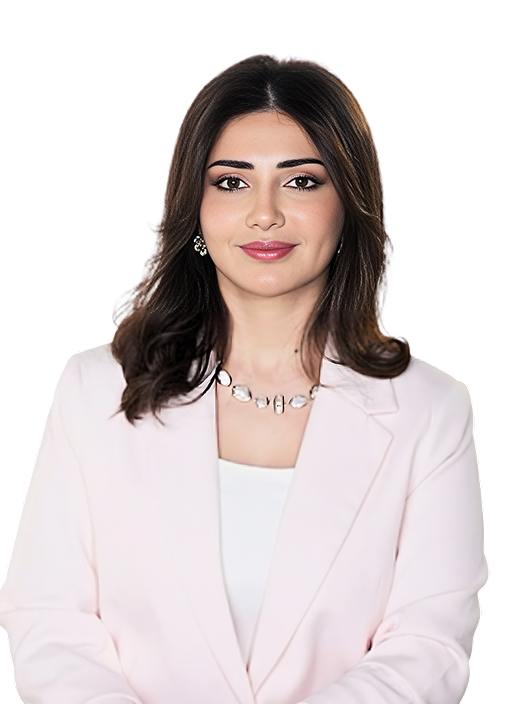
Dr. Khuzama Al Falah
Saudi-trained, internationally certified Consultant Dermatologist practising in Riyadh. Dr. Khuzama is recognised for a deliberately conservative philosophy she calls Natural Elegance — an approach to aesthetic dermatology that prioritises restoring features over re-shaping them.
Her practice combines evidence-based dermatology with refined aesthetic judgement. She lectures internationally on minimally invasive lifting and is among the first cohort of certified Endolift practitioners in the Kingdom.
- Consultant Dermatologist
- Saudi Commission for Health Specialties
- Advanced Aesthetic Dermatology Fellowship
- Saudi Commission for Health Specialties
- Certified Practitioner
Meet the author
Every clinical claim has been written, reviewed and signed off by Dr. Khuzama. We do not host sponsored content. Treatment recommendations on this site reflect what we perform in clinic — nothing more, nothing less.
Continue reading
Related from the Journal
A curated selection of clinician-led reading — chosen for patients researching their lifting and skin-tightening options.